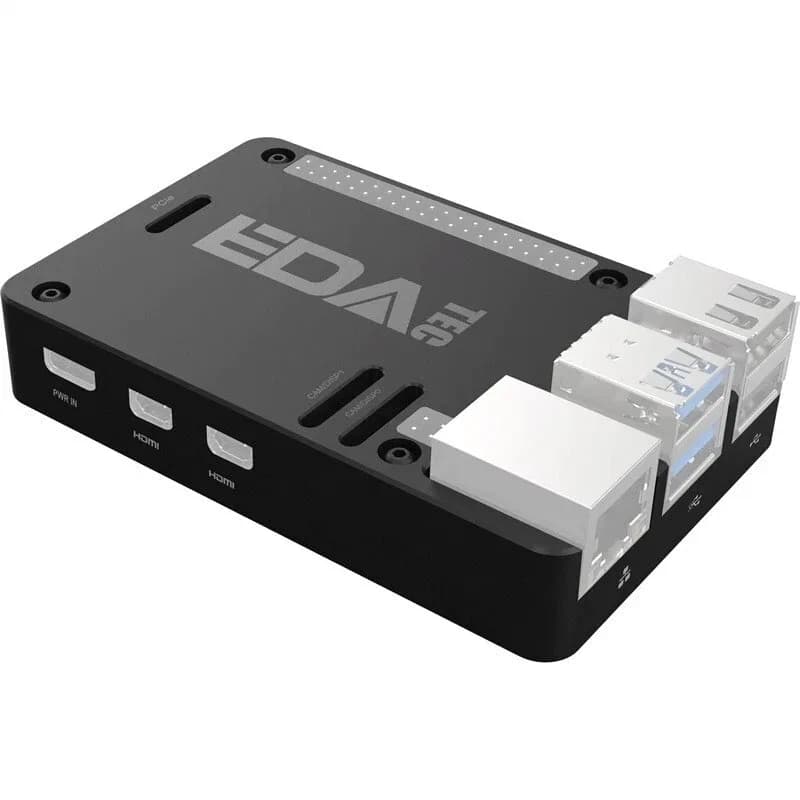

Product Description
Raspberry Pi Zero WH: a tiny board for building your own camera or automation projects
The Raspberry Pi Zero WH is a small single-board computer with the 40-pin GPIO header already soldered on, so it's ready to plug into HATs, sensors and displays straight out of the box — no soldering iron needed.
For CCTV Master customers, this matters most if you're building a custom monitoring rig: pair it with a compatible Raspberry Pi camera module via its CSI connector for time-lapse, wildlife or DIY monitoring setups, rather than buying it as a finished camera.
Key specs
- Processor: BCM2835 (same family as the original Pi 1), clocked to 1GHz — around 40% faster than the standard Pi 1 speed
- RAM: 512MB, fine for lightweight automation and networking tasks, not heavy video processing
- Video out: Mini HDMI (adapter may be needed for your display)
- Wireless: 802.11b/g/n Wi-Fi plus Bluetooth 4.1 and Bluetooth Low Energy, so no USB Wi-Fi dongle required
- Connectivity: Micro USB On-The-Go port for peripherals (via adapter/hub), separate Micro USB for power, CSI connector for camera modules
- GPIO: HAT-compatible 40-pin header, pre-soldered, for sensors, relays, motors, displays and home-automation gear
Before you buy
Check that any HAT, camera module or accessory you're planning to add is compatible with the Zero WH's 40-pin layout and CSI connector, and that your power supply and USB adapters match the Micro USB ports fitted here.
Specifications
- Brand
- Raspberry Pi
- Wireless Standard
- 802.11b/g/n
Technical Specifications
Frequently Asked Questions
How do I know if my Raspberry Pi Zero WH is faulty and not powering on?
Connect it to a computer with a USB data cable (not a charging-only cable) via the port marked 'USB' rather than 'PWR IN'; if there's no LED activity at all and it isn't detected, the board is likely faulty.
Should the Raspberry Pi Zero WH show any light when it's working?
Yes — a working board typically shows a green LED flashing briefly or is detected by a connected computer when powered via USB; no LED activity at all, even on different power supplies, points to a fault.