
Business CCTV systems for UK shops, offices and warehouses
Complete, matched systems — cameras, recorder, storage and cable in one part number — sized by the premises they protect. Every kit is built from the same Hikvision and Dahua ranges we supply to installers, with a business account, VAT invoices and a real person to talk to about camera placement.
4-camera systems: Small shop, café or office
Four cameras cover a till, an entrance, a stockroom and the rear door. A 4-channel recorder with a single drive keeps around a month of footage.
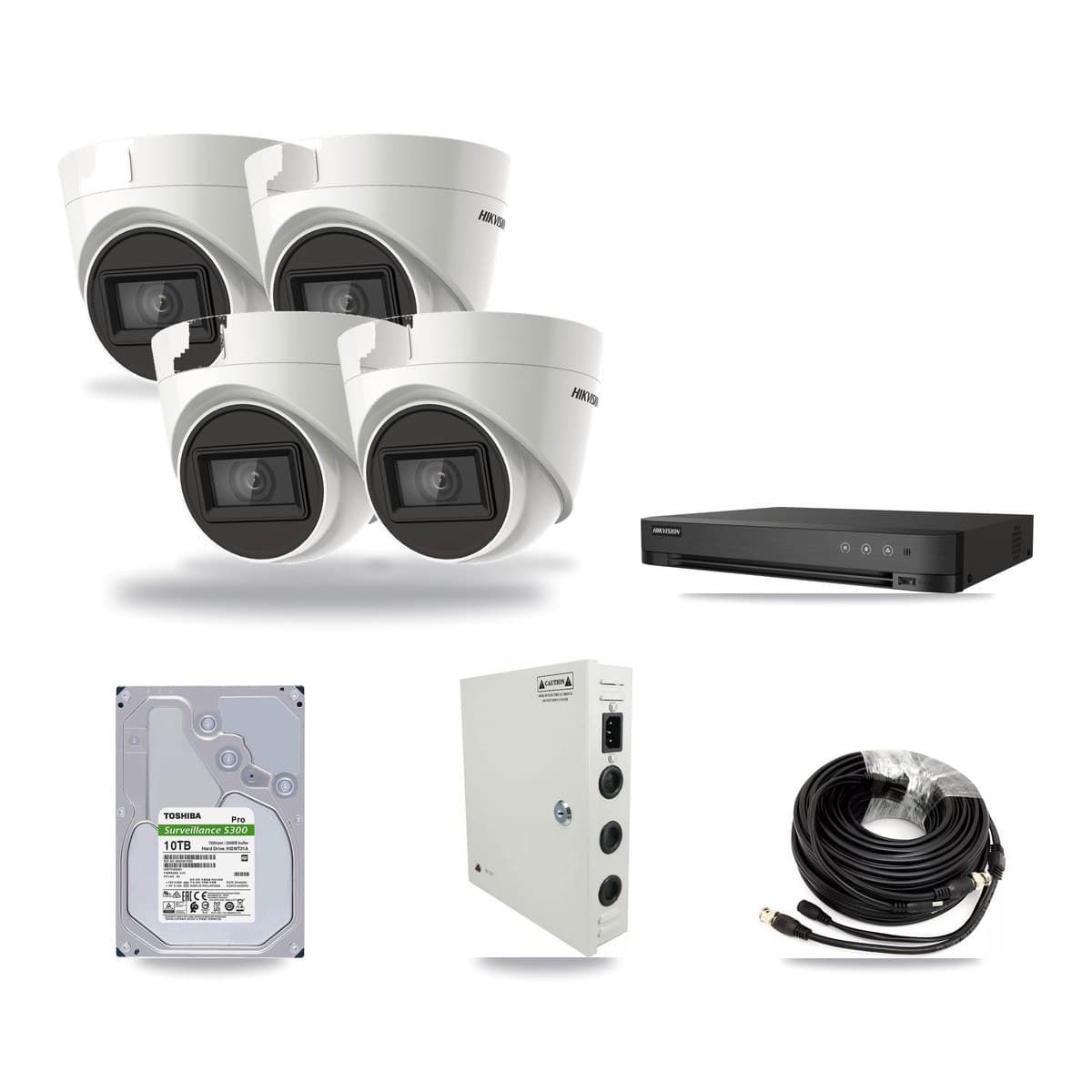
Hikvision 4-channel CCTV kit4cameras4K
- 4× 4K Turret


4-channel DVR · 10TB
Keeps about 57 days of footage
Suits a house
Works with the coax cable from an old system
Buying the parts one by one £875.50You save £43.78 (5% off)
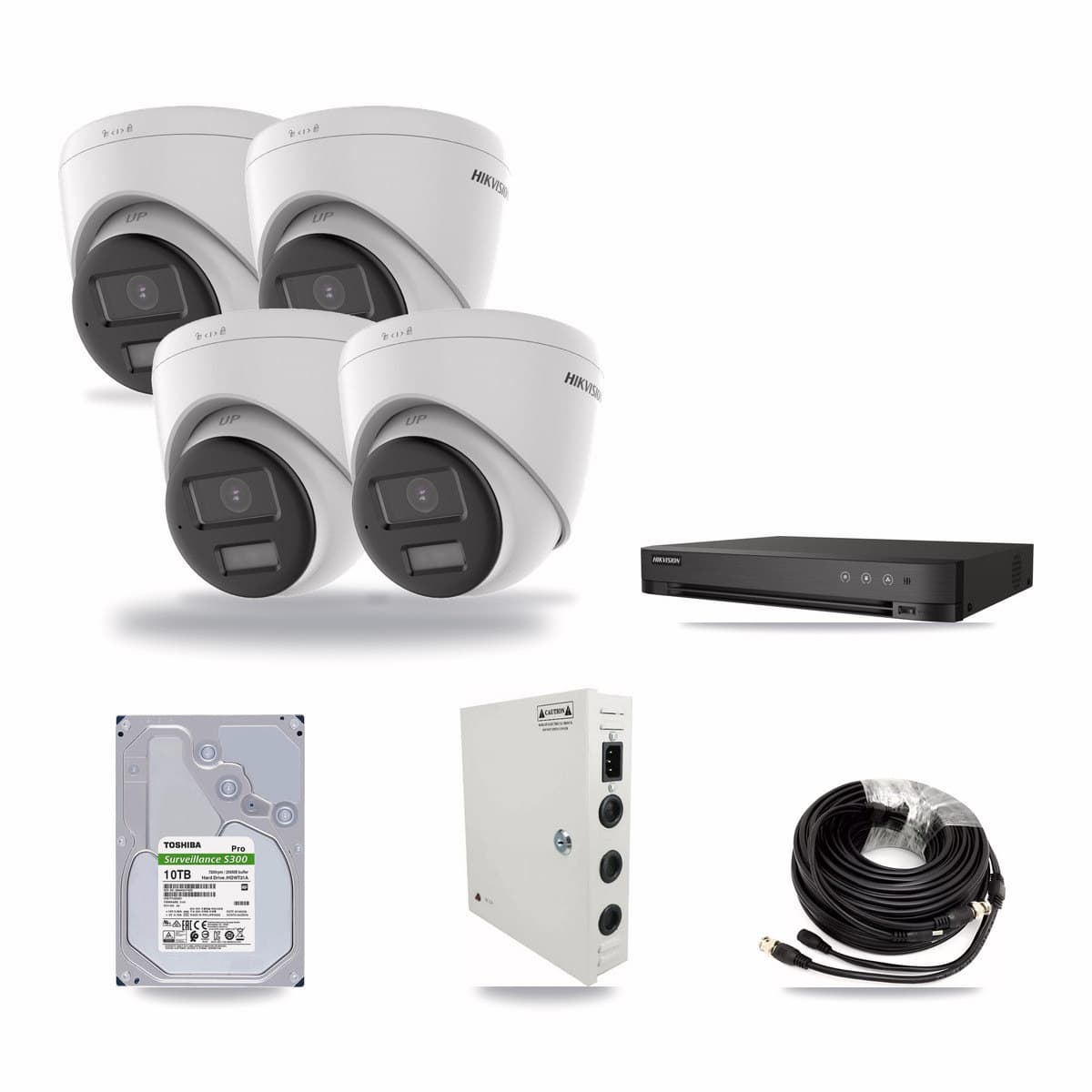
Hikvision 4-channel CCTV kit4cameras4K
- 4× 4K Turret

4-channel DVR · 10TB
Keeps about 57 days of footage
Suits a house
Works with the coax cable from an old system
Buying the parts one by one £941.74You save £47.09 (5% off)
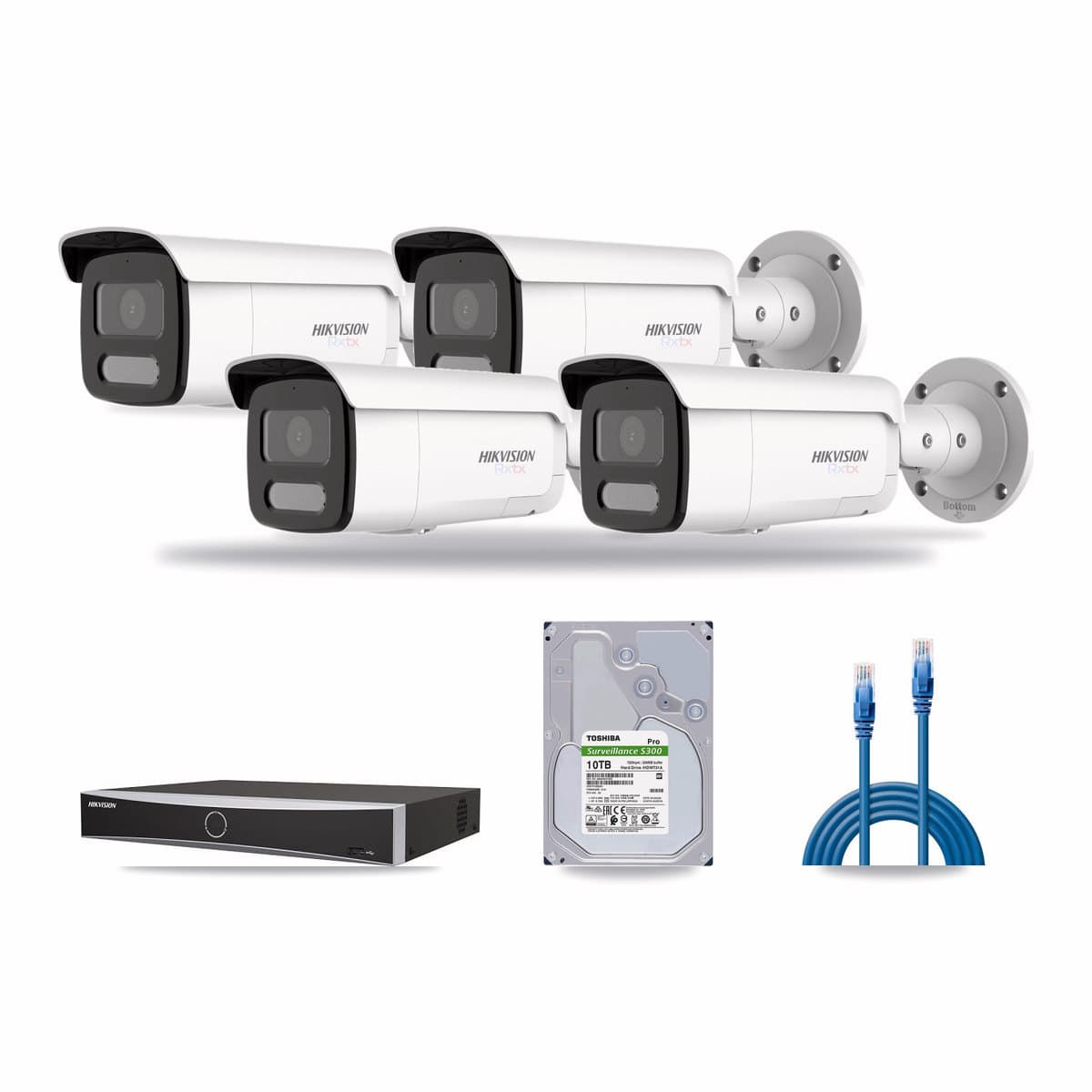
Hikvision 4-channel CCTV kit4cameras4K
- 4× 4K Bullet


4-channel NVR · 10TB
Keeps about 57 days of footage
Suits a house
One cable per camera does power and picture
Buying the parts one by one £1743.02You save £87.15 (5% off)
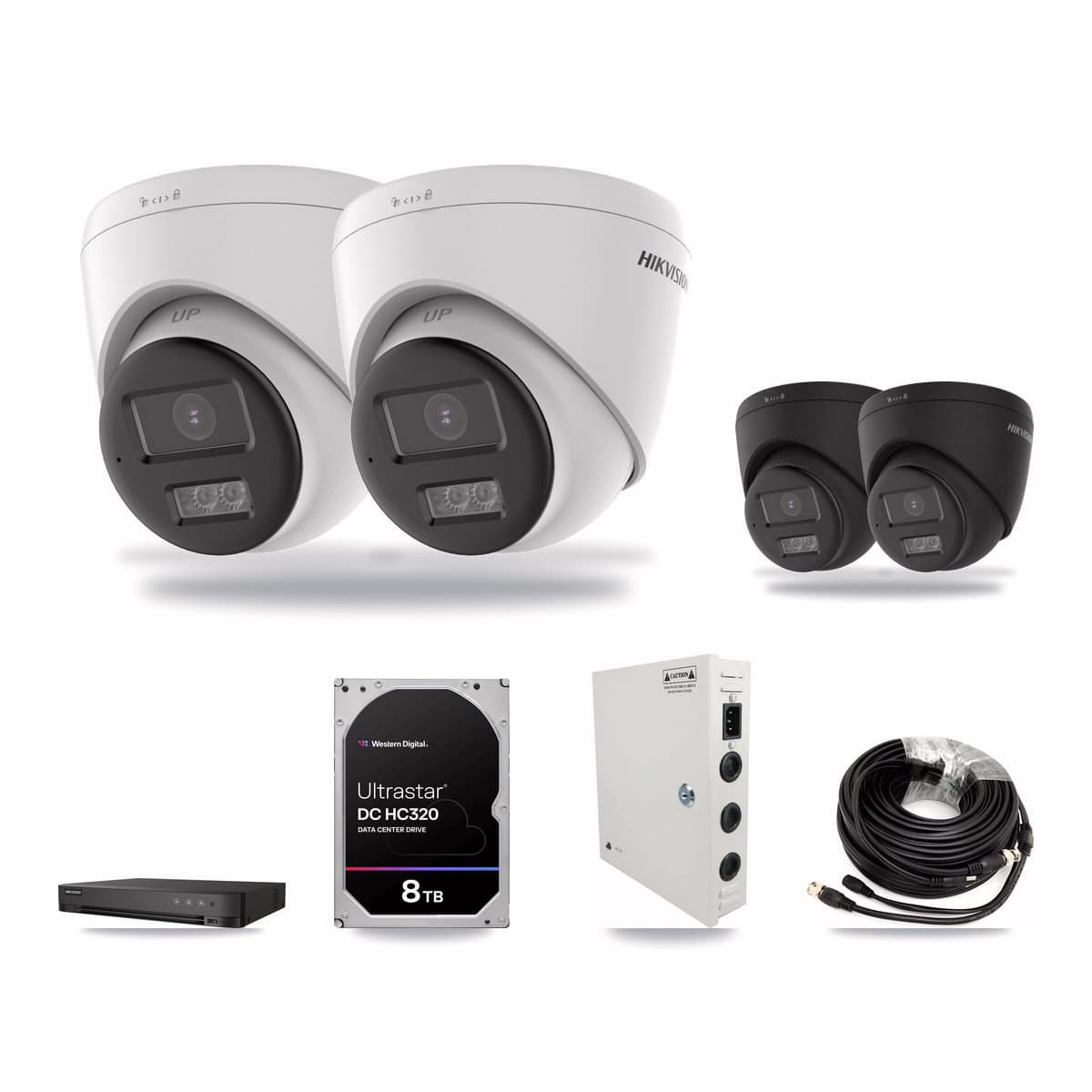
Hikvision 4-channel CCTV kit4cameras4K + 5MP
- 2× 5MP Turret
- 2× 4K Turret


4-channel DVR · 8TB
Suits a house
Works with the coax cable from an old system
Buying the parts one by one £847.87You save £42.39 (5% off)
8-camera systems: Retail unit, restaurant or clinic
Eight cameras give every aisle, both entrances, the car park and the back office their own view. The recorder should have spare channels for growth.
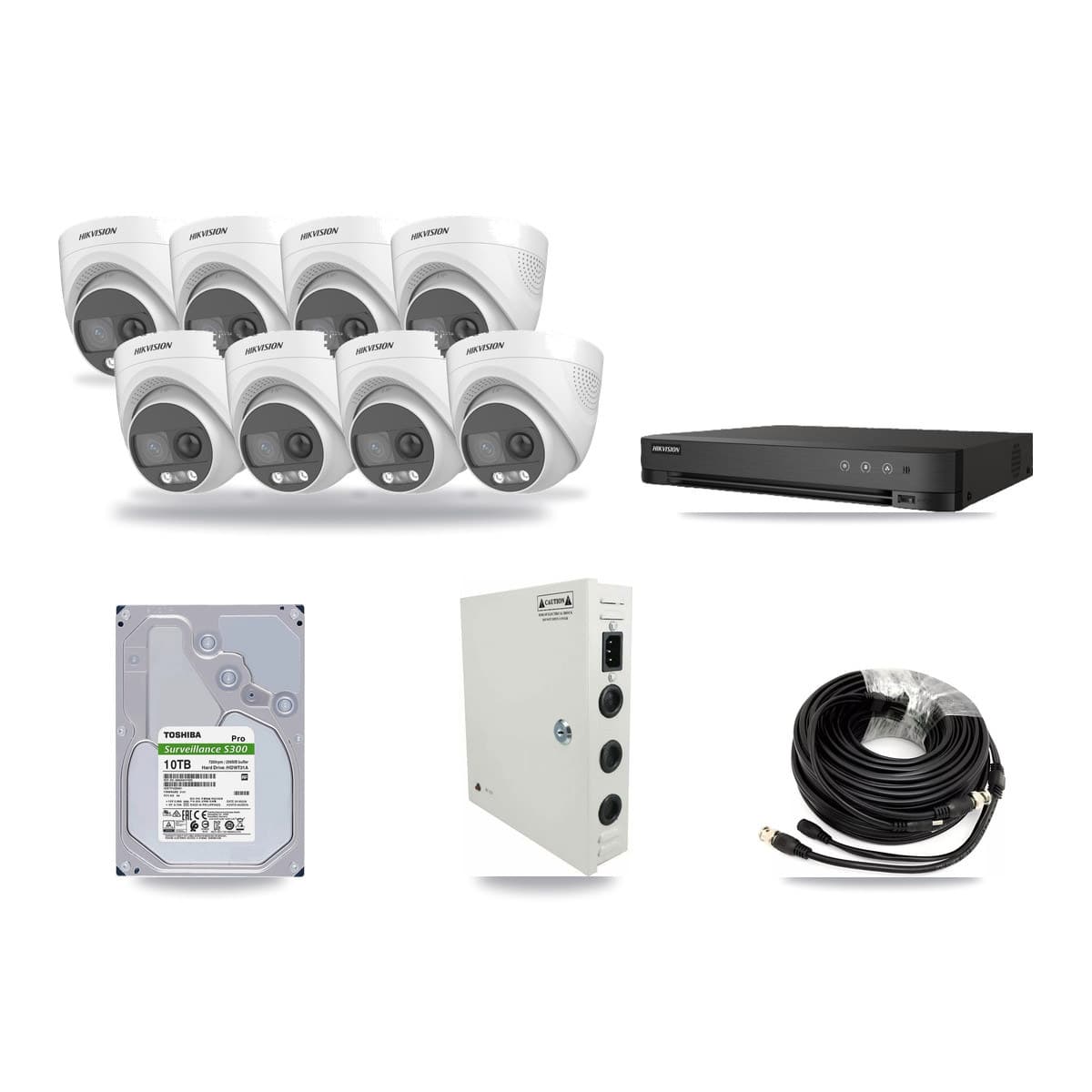
Hikvision 8-channel CCTV kit8cameras5MP
- 8× 5MP Turret


8-channel DVR · 10TB
Keeps about 57 days of footage
Suits a shop or small business
Works with the coax cable from an old system
Buying the parts one by one £1147.80You save £57.38 (5% off)
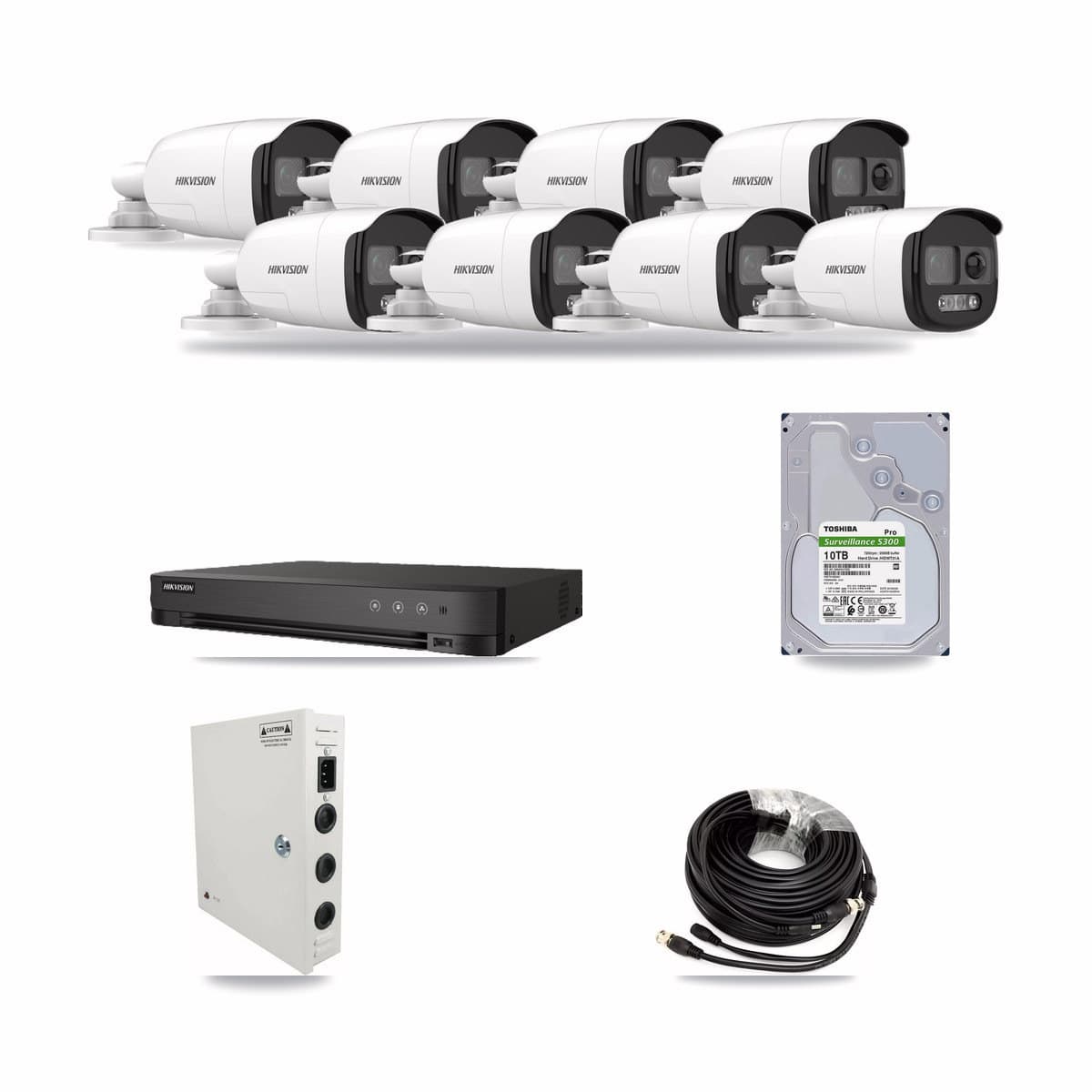
Hikvision 8-channel CCTV kit8cameras5MP
- 8× 5MP Bullet


8-channel DVR · 10TB
Keeps about 57 days of footage
Suits a shop or small business
Works with the coax cable from an old system
Buying the parts one by one £1192.20You save £59.60 (5% off)
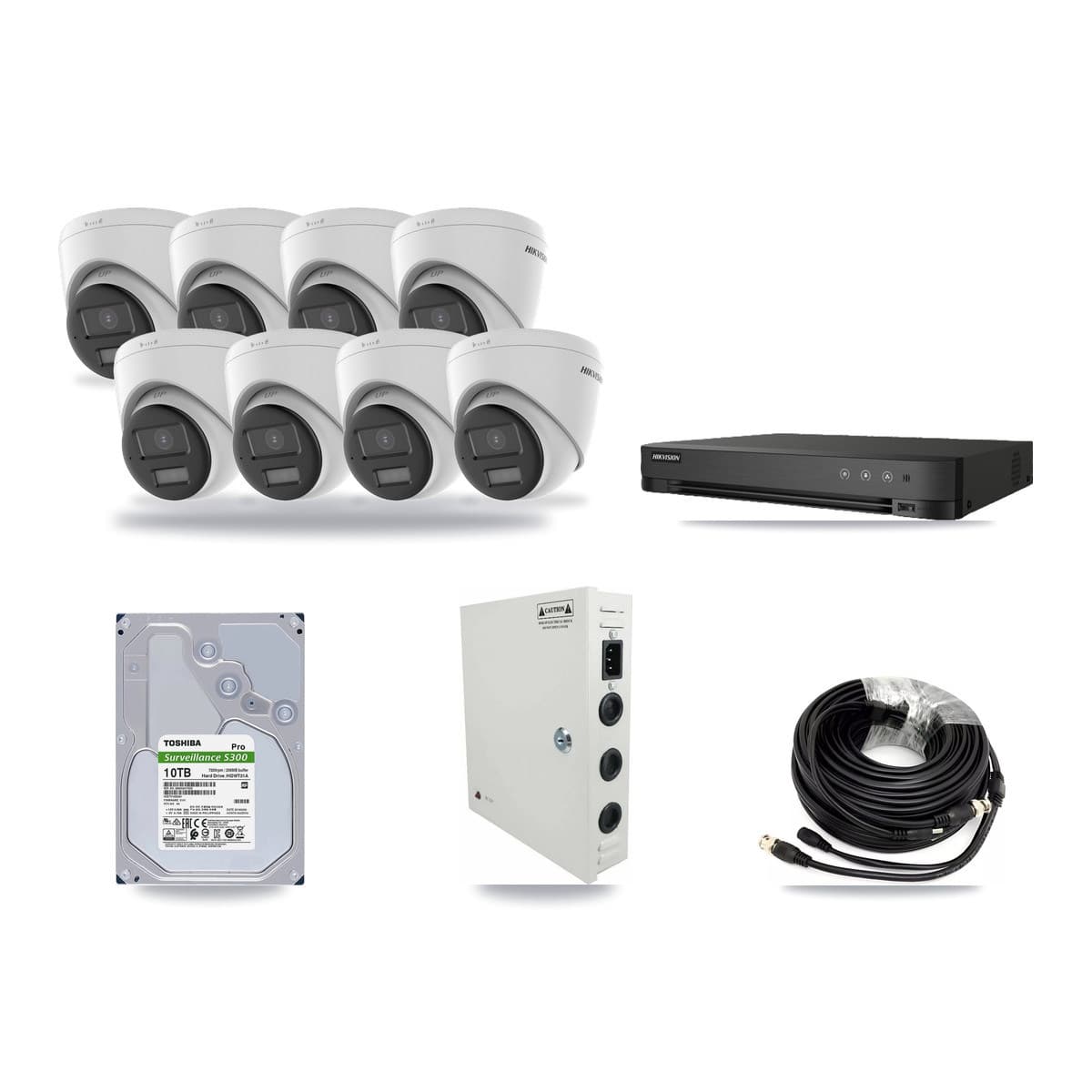
Hikvision 8-channel CCTV kit8cameras5MP
- 8× 5MP Turret

8-channel DVR · 10TB
Keeps about 57 days of footage
Suits a shop or small business
Works with the coax cable from an old system
Buying the parts one by one £1203.34You save £60.17 (5% off)
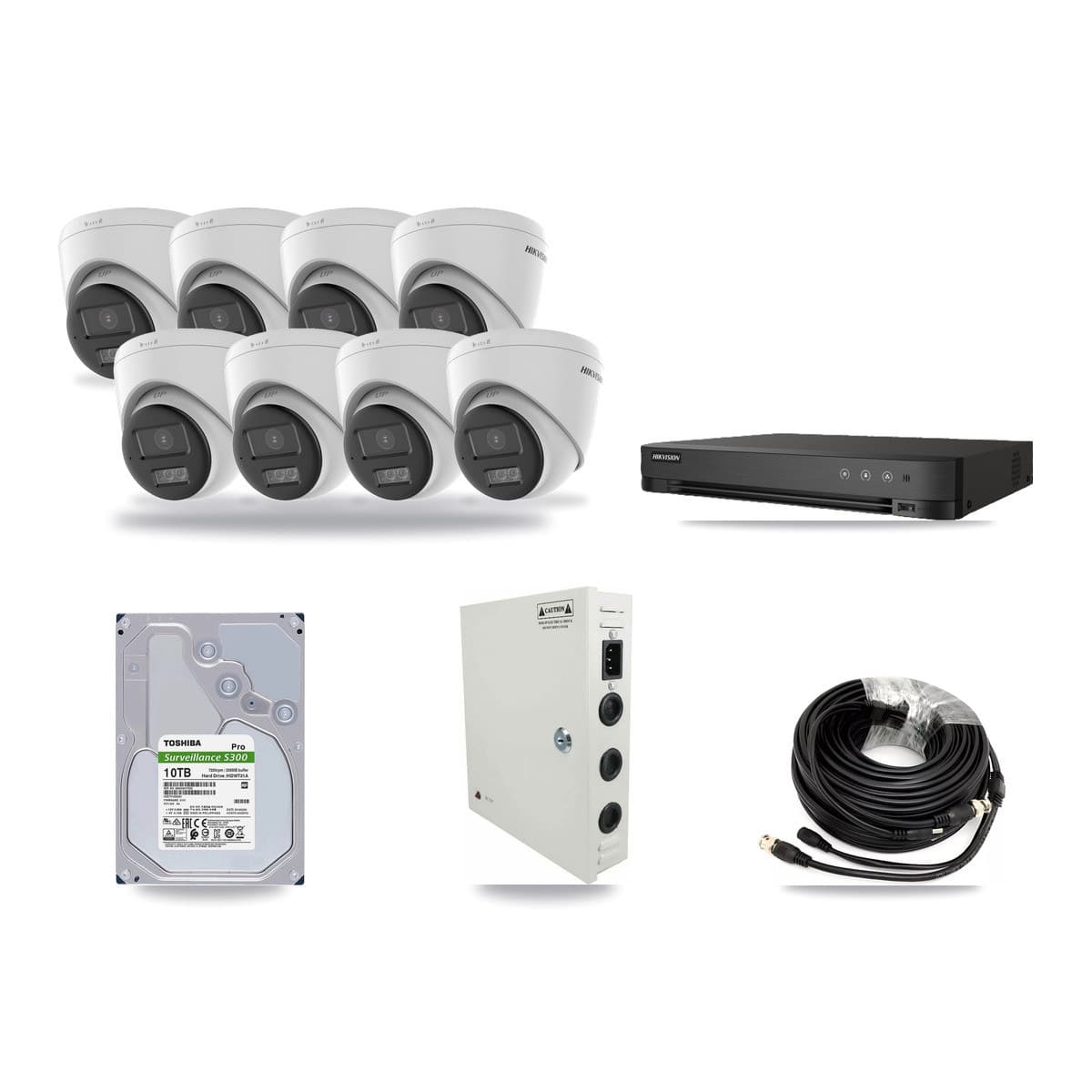
Hikvision 8-channel CCTV kit8cameras5MP
- 8× 5MP Turret
8-channel DVR · 10TB
Keeps about 57 days of footage
Suits a shop or small business
Works with the coax cable from an old system
Buying the parts one by one £1226.28You save £61.31 (5% off)
16-camera systems: Warehouse, yard or multi-floor site
Sixteen channels cover loading bays, perimeters and internal routes. Pair long-range IR or ColorVu cameras outside with turrets inside, and size storage for the retention you need.
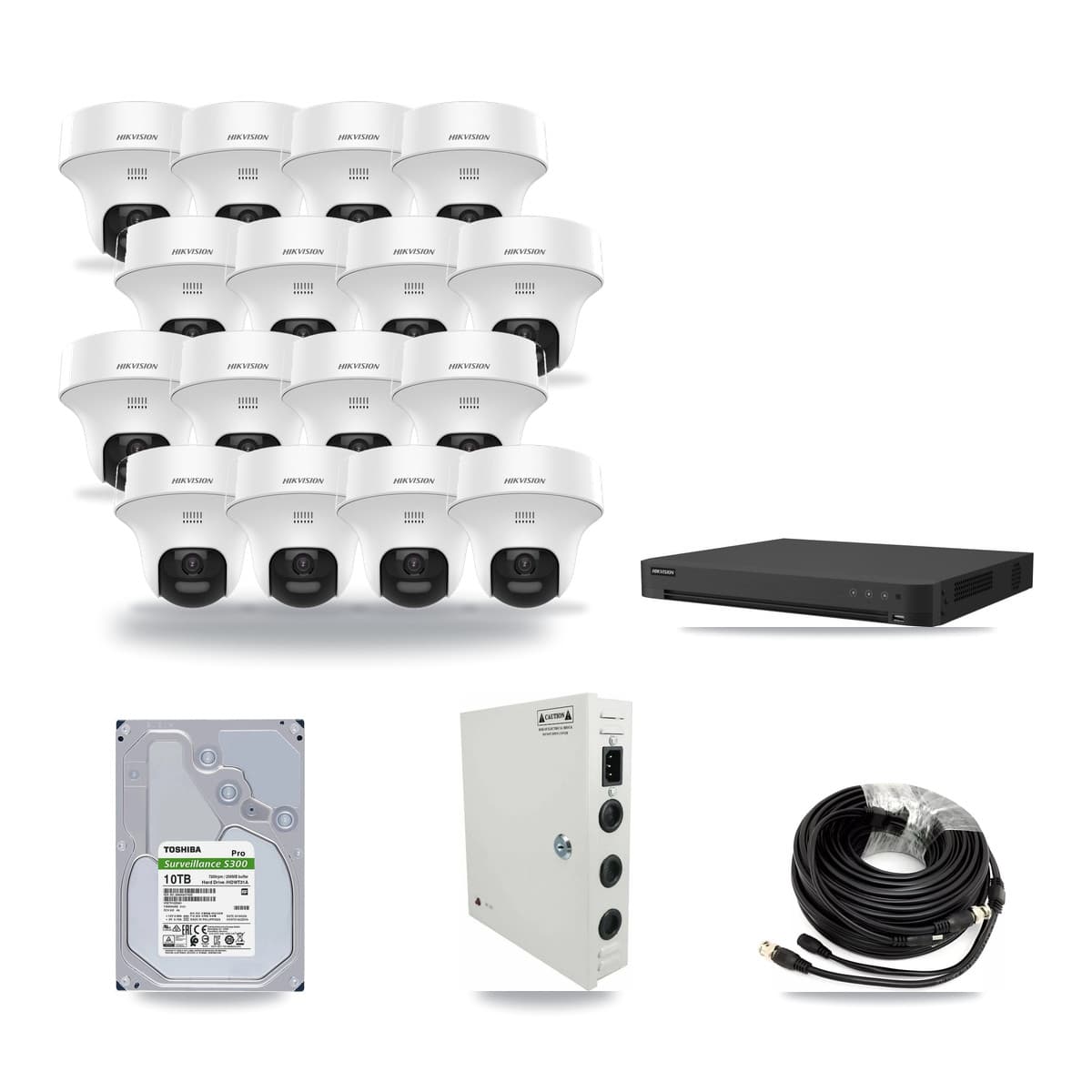
Hikvision 16-channel CCTV kit16cameras5MP
- 16× 5MP Turret


16-channel DVR · 10TB
Keeps about 28 days of footage
Suits a big property or yard
Works with the coax cable from an old system
Buying the parts one by one £2156.51You save £107.82 (5% off)
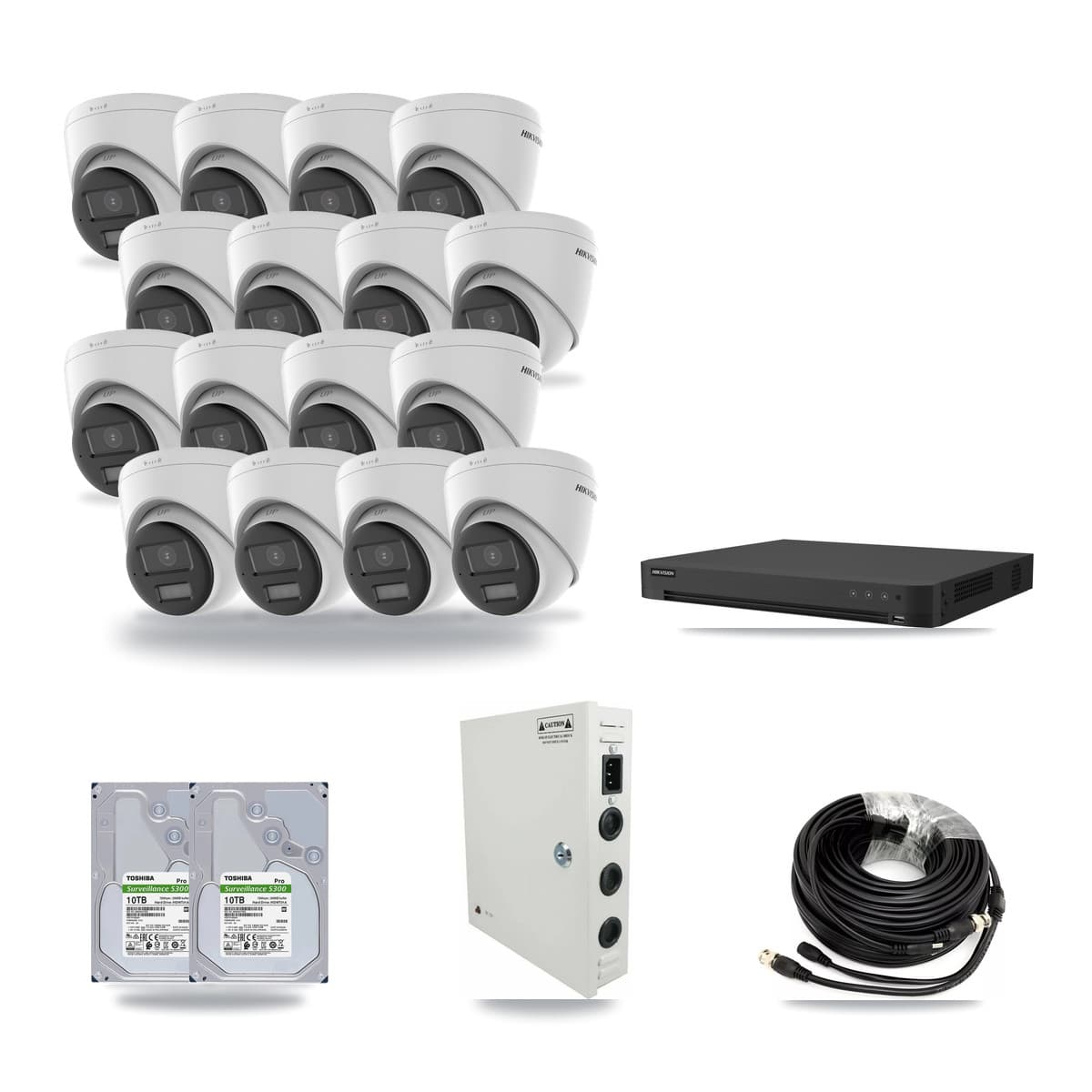
Hikvision 16-channel CCTV kit16cameras5MP
- 16× 5MP Turret
16-channel DVR · 2× 10TB
Keeps about 57 days of footage
Suits a big property or yard
Works with the coax cable from an old system
Buying the parts one by one £2389.73You save £119.49 (5% off)
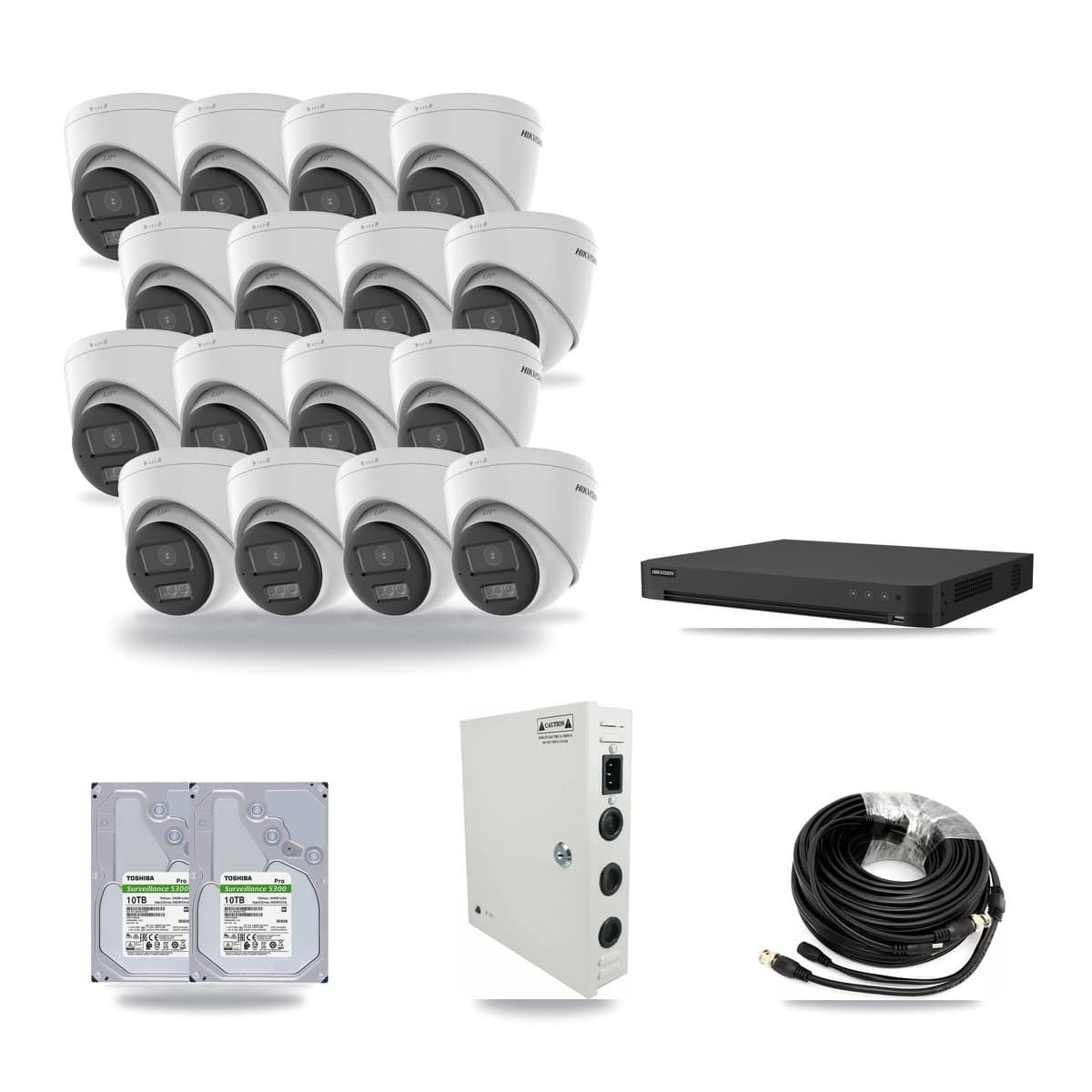
Hikvision 16-channel CCTV kit16cameras5MP
- 16× 5MP Turret
16-channel DVR · 2× 10TB
Keeps about 57 days of footage
Suits a big property or yard
Works with the coax cable from an old system
Buying the parts one by one £2435.62You save £121.78 (5% off)
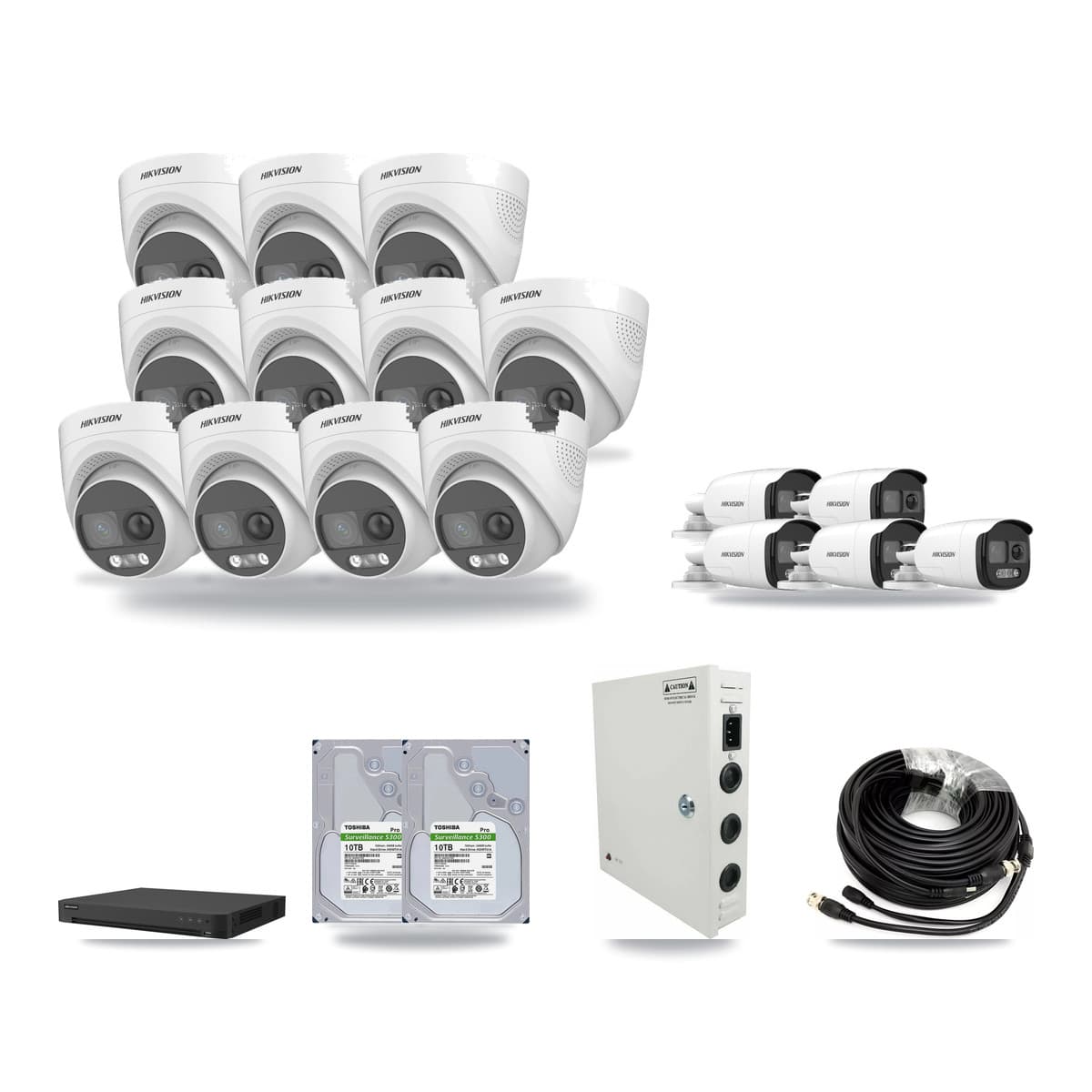
Hikvision 16-channel CCTV kit16cameras5MP
- 11× 5MP Turret
- 5× 5MP Bullet
16-channel DVR · 2× 10TB
Keeps about 57 days of footage
Suits a big property or yard
Works with the coax cable from an old system
Buying the parts one by one £2397.55You save £119.88 (5% off)
Not sure how many cameras you need?
Answer three questions and the finder narrows the range to systems that fit your site.
Where are the cameras going?
This only picks a starting number of cameras. You can change it later.
How to size a CCTV system for a business
Start by listing the views you need, not the floor area: every entrance and exit, every till or counter, the stockroom door, the loading bay, the car park and any blind corner staff have complained about. Each view is one camera. Most small premises land on four to eight; a warehouse or a site with a yard usually needs sixteen channels so there is room to add cameras later without replacing the recorder.
Cameras: resolution and night performance
4MP is the sensible floor for identifying a person; 4K (8MP) lets you crop into a wide view — a car park or a shop floor — and still read a face or a plate. Night performance matters more than resolution for most incidents: infrared gives clear black-and-white footage, while white-light (ColorVu) cameras keep colour, which is what a police report actually needs. Turrets are the default indoors and out; use bullets for long, narrow views.
Recorder and storage: how long you keep footage
The recorder's channel count sets your ceiling, so buy headroom. Storage is the quiet cost: the number of cameras, their resolution and your retention period decide the hard-drive size. Around 30 days is the usual retention for a business — long enough for an incident to be reported and the clip exported. Our storage calculator turns cameras, resolution and days into a drive size.
The legal side: signage, purpose and retention
CCTV on business premises is covered by UK GDPR and the Data Protection Act 2018. You need a clear purpose (safety, preventing theft), visible signs saying that recording is taking place and who is responsible, access limited to people who need it, and a retention period you can justify. Staff must be told. The ICO's video surveillance guidance is the reference most businesses follow.
PoE IP or Turbo HD?
A PoE IP kit runs power and video over one Cat6 cable per camera and gives the best image quality and the simplest install on a new site. Turbo HD reuses existing coax, costs less per channel and is the right choice when a shop is replacing an older analogue system without rewiring. Both record to a hard drive, support phone viewing and take the same signage and retention rules.
What happens after you order
Kits are picked from UK stock with the cable and connectors they need. If you want the system sized before you buy, send us a sketch or a list of views and we will confirm the camera count, lens choice and storage. Business and trade accounts get account pricing and VAT invoices on every order.
Business CCTV — frequently asked questions
What is the best CCTV system for a business?
For most UK businesses a PoE IP kit with 4K (8MP) or 4MP cameras and an NVR is the right default: one cable per camera, clear footage day and night, and remote viewing on a phone. Turbo HD (analogue HD) kits cost less and reuse existing coax, which suits refits. Choose the camera count by counting the views you need — entrances, tills, stock, car park — rather than by floor area.
How much does CCTV cost for a business?
The price is driven by four things: how many cameras, their resolution and night-vision range, how many days of footage you keep (which sets the hard-drive size), and whether you install yourself or use an installer. Every kit on this page shows its full price with the recorder and storage included, so you can compare complete systems rather than parts.
Can an employer legally watch staff on CCTV in the UK?
Yes, where there is a legitimate purpose such as safety or preventing theft, and staff are told. UK GDPR and the Data Protection Act 2018 apply: put up clear signage, keep footage only as long as needed, restrict who can view it, and document why you record. Covert monitoring is only lawful in narrow, serious cases. Most businesses work from the ICO's published CCTV guidance.
Which CCTV camera is best for commercial use?
Turret cameras are the workhorse: vandal-resistant, easy to aim, and available with white-light (ColorVu) illumination that keeps colour at night. Bullets suit long, narrow views such as driveways and perimeters. Add an ANPR camera for a car park barrier and a PTZ for a large yard you want to steer live.
How long should a business keep CCTV footage?
There is no fixed legal period; the ICO expects you to keep footage only as long as your stated purpose needs. Around 30 days is the common choice, which gives time for an incident to be reported and the clip exported. Size the recorder's hard drive for that period at the resolution and frame rate you actually record.
Do I need a professional installer, or can I fit a kit myself?
A PoE kit is a straightforward fit for anyone comfortable running Cat6 cable and mounting brackets: cameras power over the same cable and the recorder detects them automatically. Larger sites, ANPR, integration with alarms or access control, and anything at height usually justify an installer. Every kit here comes with the cable and connectors it needs.