
Product Description
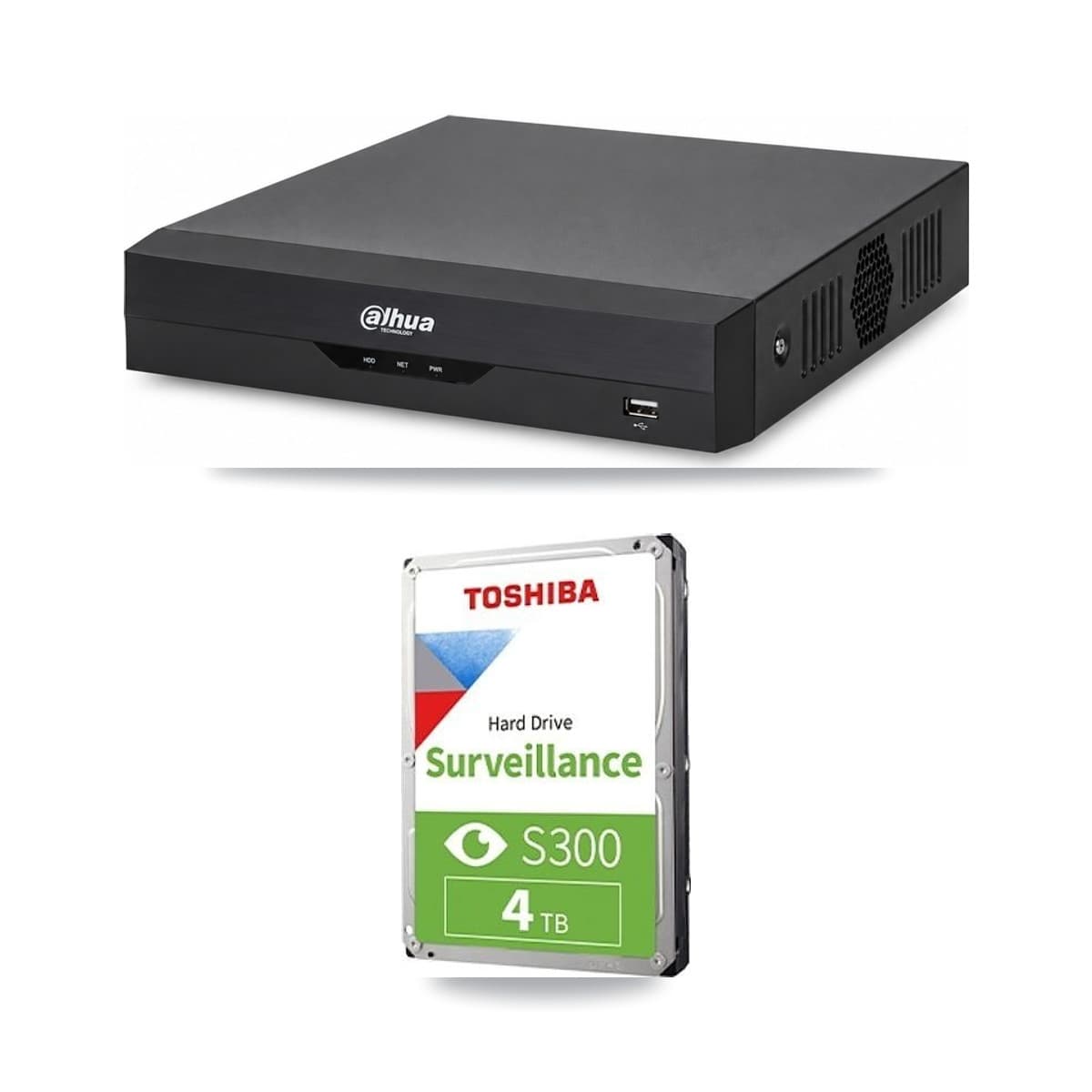
Toshiba S300 4TB — storage built to record, not just store
This is the drive that goes inside your recorder, not a backup disk you plug in occasionally. The Toshiba S300 4TB is a surveillance-grade hard disk, purpose-built for DVR and NVR boxes that write video continuously, day and night, without a break.
Why that matters: ordinary desktop drives aren't rated for 24/7 write cycles. Push several cameras' worth of footage at one non-stop for months and a standard drive can wear out or drop frames. The S300 series is engineered specifically for that workload.
Key specs
- Capacity: 4TB
- Interface: 3.5" SATA III, 6 Gb/s — fits the drive bay in most modern DVR/NVR units
- Spindle speed: 5400 RPM — favours steady, sequential writing over raw speed, which is what continuous video recording actually needs
- Duty cycle: designed for continuous 24/7 operation
- Use case: multi-camera surveillance recording, residential or small business installs
Before you buy
Check your recorder's maximum supported drive capacity and interface type before ordering — most modern DVR/NVR units take a 3.5" SATA drive, but it's worth confirming against your model's manual. 4TB gives useful headroom for several cameras recording continuously, though how long that footage lasts depends on camera count, resolution and frame rate.
Specifications
- Brand
- Toshiba
Technical Specifications
Frequently Asked Questions
Will this drive fit my DVR or NVR?
It uses a standard 3.5" SATA III interface, which fits most modern DVR and NVR recorders, but check your recorder's maximum supported capacity first.
Is 4TB enough storage for CCTV recording?
4TB suits several cameras recording continuously, though actual retention time depends on how many cameras you run and their resolution and frame rate.
Why not just use a normal desktop hard drive?
Desktop drives aren't designed for continuous 24/7 writing; the S300 series is built specifically for that non-stop surveillance workload.
What does the 5400 RPM spindle speed mean in practice?
It favours stable, sequential write performance over raw speed, which suits continuous video ingest better than a faster but less steady drive.