
14TB CCTV Storage Drives — Home & Business HDDs
5 products in our Storage range — trade-grade UK stock from CCTV Master.
All products
5 products


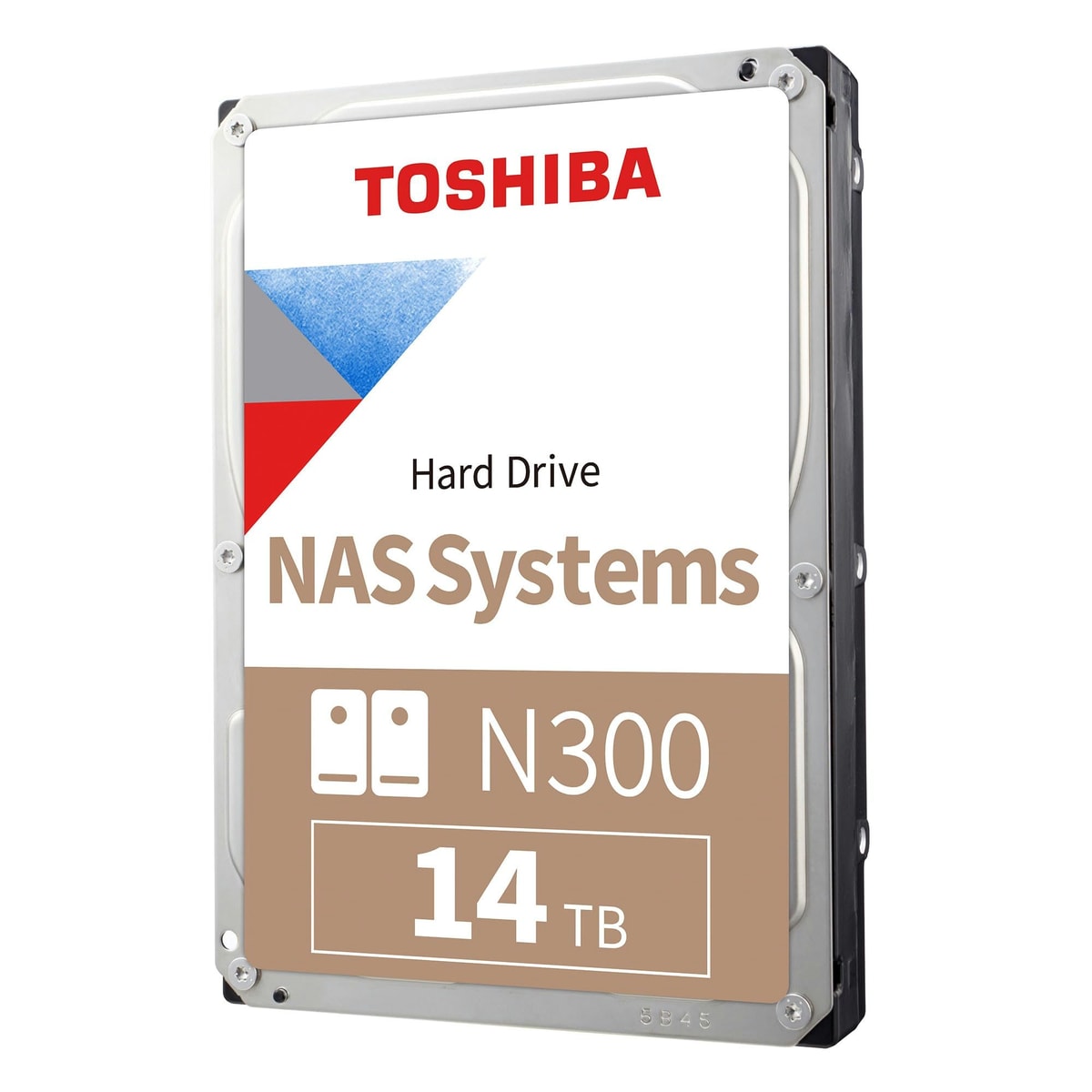

14TB drives sit at the higher-capacity end of hard disk storage — enough to hold a large number of recorded CCTV channels before older footage needs to be overwritten. This range covers five 3.5" SATA drives, spanning enterprise HDDs, NAS-rated drives, and one standard internal drive.
How to choose
- Application setting: the Seagate Exos X16 and Toshiba MG07ACA14TE are built and rated as enterprise HDDs, aimed at continuous, heavier-duty use in servers or DVR/NVR systems.
- NAS vs general use: the Seagate IronWolf Pro and Toshiba N300 are NAS-specific drives, designed for network-attached storage boxes such as those often used to back up or extend CCTV recordings.
- Rotational speed: most drives here run at 7200RPM; the Western Digital WD140EDFZ is the exception at 5400RPM, which generally trades some speed for lower running noise and power draw.
- Interface and form factor: all five are 3.5" SATA drives, so check your recorder or NAS bay supports this size and interface before buying.
Whichever you pick, confirm your existing recorder or storage enclosure explicitly supports 14TB drives, since not every older system recognises capacities this large.
14TB — frequently asked questions
What does 14TB mean for CCTV storage?
It refers to the drive's total storage capacity, roughly 14,000GB, which determines how many days or channels of recorded footage can be held before older recordings are overwritten.
What's the difference between an enterprise HDD and a NAS HDD in this range?
Enterprise HDDs like the Seagate Exos X16 and Toshiba MG07ACA14TE are built for continuous heavy-duty use, while NAS drives like the IronWolf Pro and Toshiba N300 are designed specifically for network-attached storage enclosures.
Does rotational speed matter when choosing a 14TB drive?
Generally yes — most drives here run at 7200RPM, while the Western Digital WD140EDFZ runs at 5400RPM, which can mean quieter, lower-power operation but potentially slower data access.