
Product Description
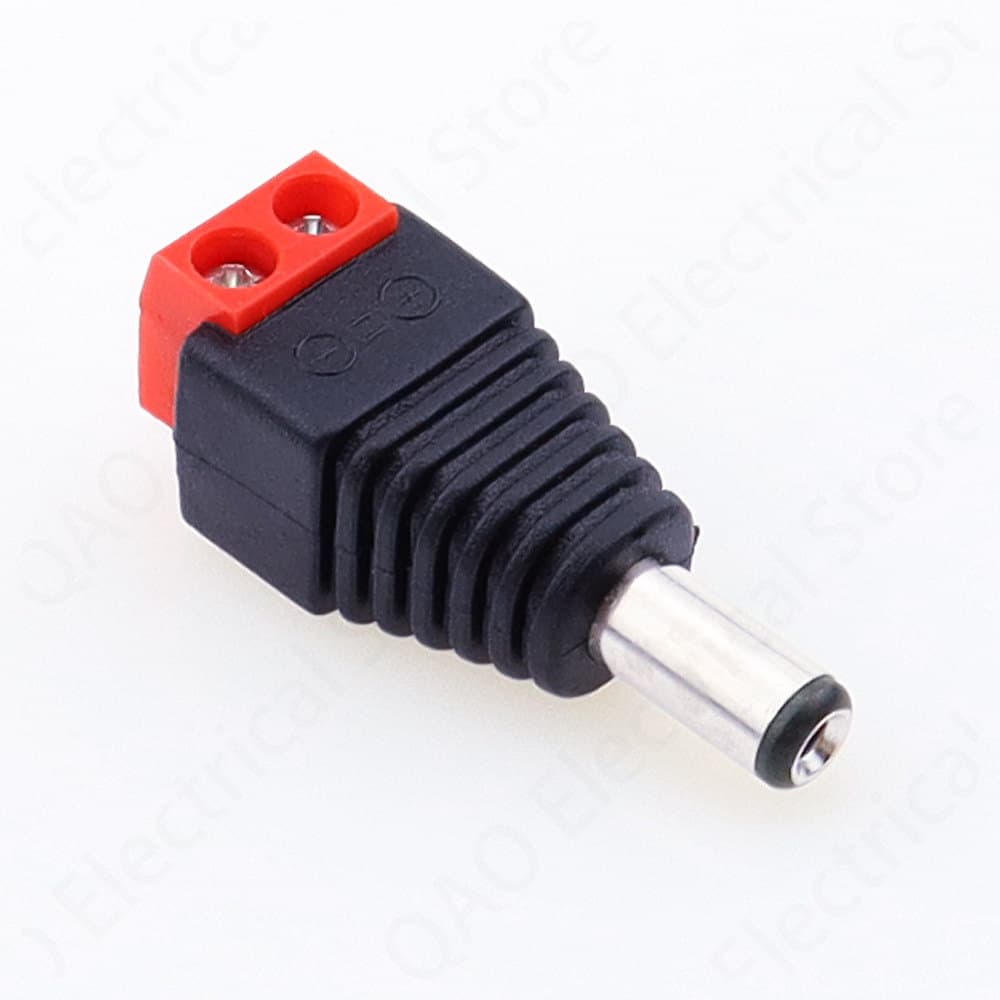
A DC 2.1mm male power plug lets you wire your own power connection for a CCTV camera, DVR, NVR or LED fitting instead of buying a fixed pre-terminated lead.
What it does
It has a push-button terminal: strip the wire, press the button, push the conductor in, release. No screwdriver, no soldering iron, no crimping tool. That's the whole fitting job.
Where it fits
The plug end is a standard 5.5mm x 2.1mm DC connector — the same size used on the vast majority of 12V CCTV cameras and power supplies, so it should mate with your existing socket if that's the size stated on your camera or PSU. Always check your device's spec before ordering, since some cameras use a different barrel size.
Why it's useful on site
Because termination is tool-free, this is handy where you're making up cable runs to length rather than buying ready-made leads — for example:
- Powering a CCTV camera from a DVR/NVR power output
- Wiring LED lighting on a 12V DC circuit
- Making up custom leads inside junction boxes or camera housings, where space is tight and a compact fitting matters
A quick word on power and picture quality
If a camera's IR night vision flickers or drops out, a common cause is voltage drop from a long or thin cable run rather than the connector itself — worth checking your cable gauge and adapter rating alongside the connection.
Specifications
- Voltage
- 12V
- Colour
- Red
Technical Specifications
Frequently Asked Questions
Do I need any tools to wire this connector?
No — it uses a push-button terminal, so you strip the wire, press the button and push the conductor in, without a screwdriver or solder.
Will this fit my CCTV camera's power socket?
It's a standard 5.5mm x 2.1mm DC plug, which fits the majority of 12V CCTV cameras and power supplies, but check your device's socket size first.
Can I use this for something other than CCTV?
Yes — it's also suited to LED lighting and other 12V DC power connections, not just camera installs.
My camera's night vision flickers — is the connector to blame?
Possibly not directly; flickering IR at night is often caused by voltage drop on a long or thin cable run, so check your cable and power adapter rating too.